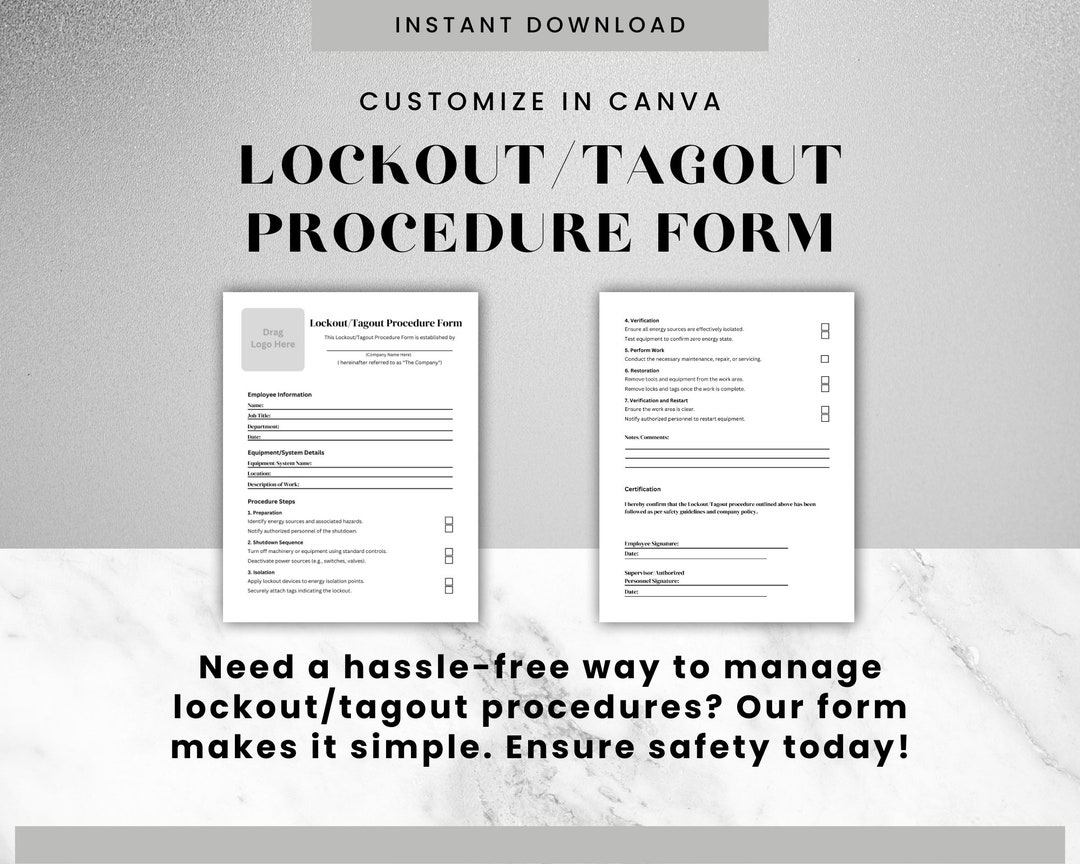
Every year, preventable accidents occur during equipment servicing—workers injured, lives lost, operations disrupted—not because machines fail, but because safety systems aren’t followed. The core failure? Missing or misapplied lockout and tagout (LOTO) procedures.
At its heart, LOTO is about one thing: control. It’s the systematic process of isolating hazardous energy sources before maintenance begins. When done correctly, it ensures machines can’t start unexpectedly. When skipped or poorly executed, the consequences are often catastrophic.
This guide outlines the full scope of an effective lockout and tagout procedure—what it is, how to implement it, where people go wrong, and how to make it stick in real-world environments.
What Is a Lockout and Tagout Procedure?
Lockout and tagout refers to the practice of physically locking energy-isolating devices and placing warning tags to prevent the accidental release of hazardous energy during servicing or maintenance.
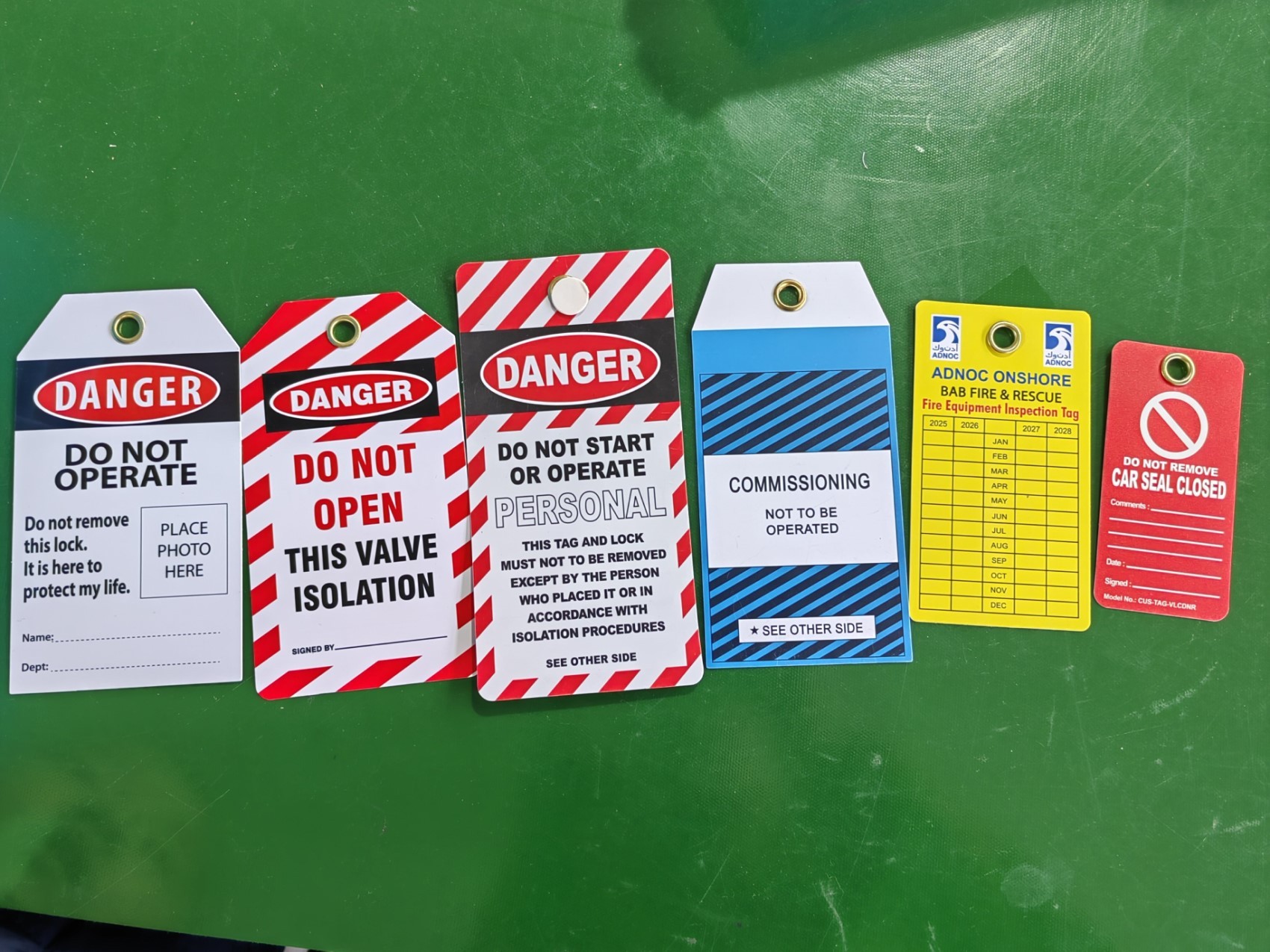
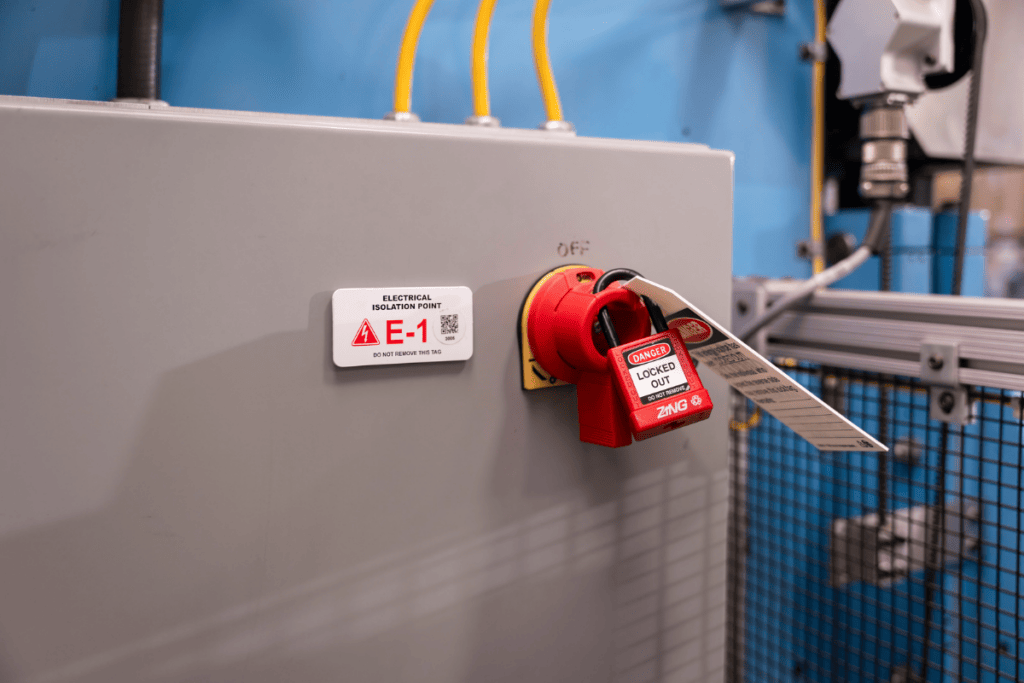
Lockout means applying a lock to an energy source—like a circuit breaker, valve, or disconnect switch—that only the authorized employee can remove. Tagout involves attaching a warning tag to the device that explains why it’s locked, who locked it, and when.
Together, these create a visible, enforceable barrier between danger and personnel.
While often used interchangeably, lockout is more secure than tagout, which is considered secondary protection. OSHA permits tagout only when lockout isn’t feasible, and even then, additional safety measures must be in place.
Why LOTO Procedures Are Non-Negotiable
The stakes aren’t theoretical. OSHA estimates that nearly 10% of serious accidents in manufacturing are related to uncontrolled energy. These incidents typically involve:
- Unexpected startup of machinery
- Release of stored energy (hydraulic pressure, springs, capacitors)
- Failure to isolate multiple energy sources
Consider this real-world scenario: A technician begins cleaning a conveyor belt system. The power is off, but no lockout is applied. A coworker, unaware of the maintenance, restarts the system from a remote control station. The conveyor engages. The technician suffers severe arm lacerations.
This could have been avoided with a basic LOTO procedure.
Beyond saving lives, LOTO compliance protects organizations from:
- OSHA fines (violations can exceed $15,000 per instance)
- Operational downtime
- Legal liability
- Reputational damage
It’s not just a checklist—it’s a culture of accountability.
The 6-Step Lockout and Tagout Procedure
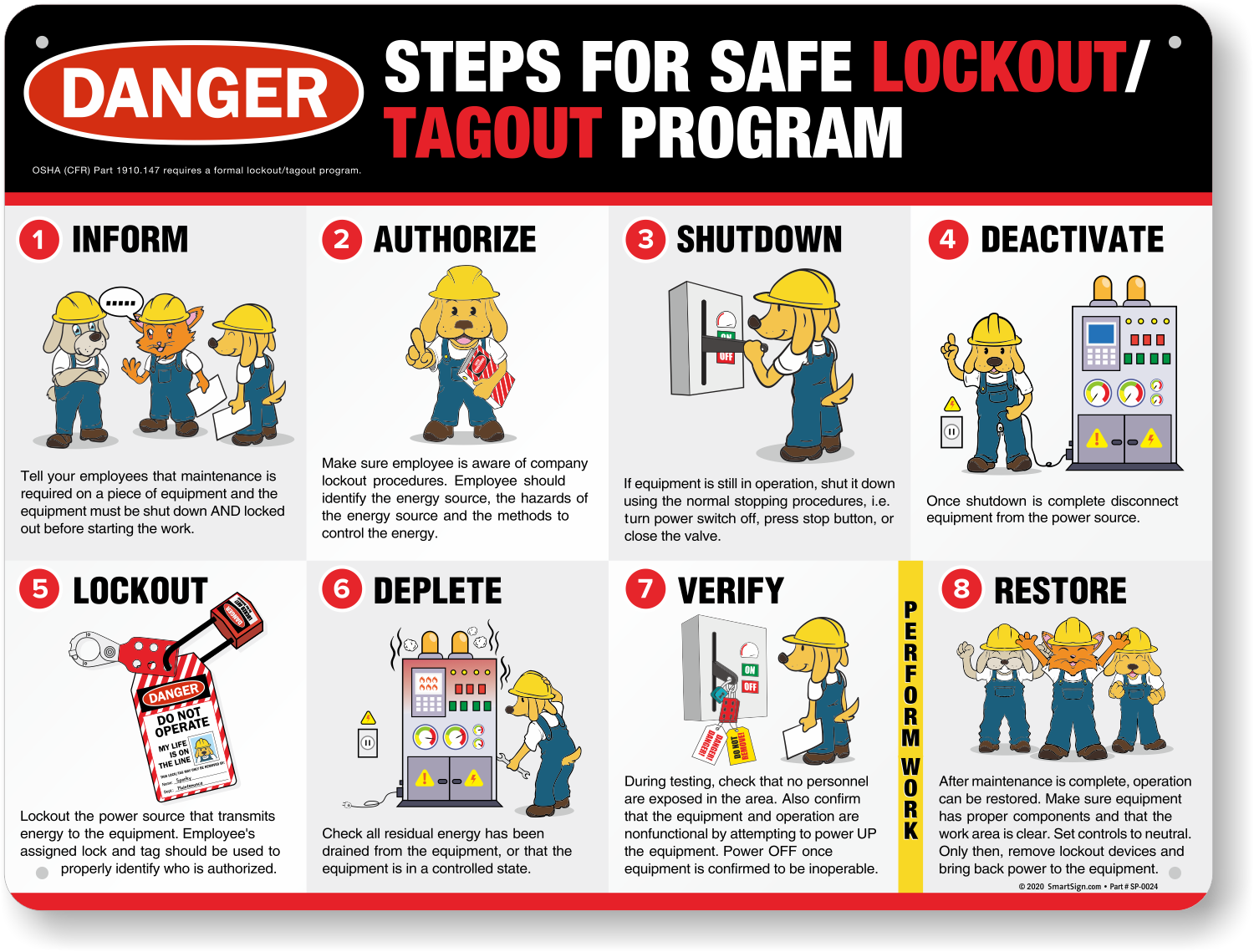
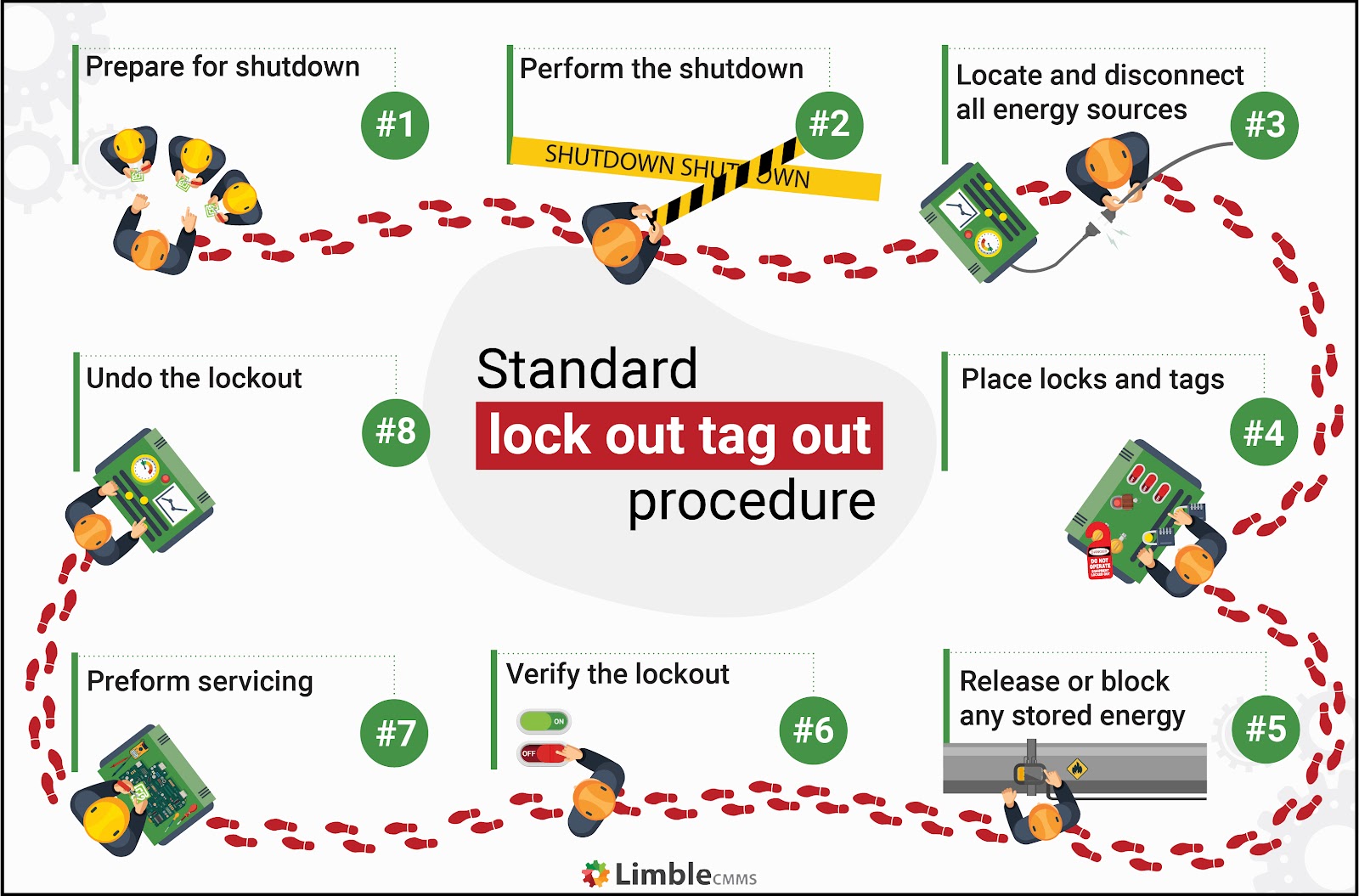
An effective LOTO process isn’t improvisation. It follows a strict, repeatable sequence. Here are the six essential steps:
1. Prepare for Shutdown
Before any action, authorized employees must know:
- The type and magnitude of energy involved
- The associated hazards
- The method to isolate and control that energy
This step includes reviewing equipment-specific LOTO procedures. Never assume. Always verify.
2. Notify Affected Personnel
Communicate the upcoming shutdown to all affected workers—those who operate or use the equipment. This prevents confusion and discourages unauthorized attempts to restart.
Example: A maintenance supervisor announces over the facility PA: “Line 3 will be down for servicing. Do not attempt to operate.”
3. Shut Down the Equipment
Use normal stopping procedures. Press the emergency stop, power down control panels, close valves—whatever standard shutdown protocol requires.
Critical point: Emergency stops are not isolation devices. They do not replace lockout.
4. Isolate Energy Sources
Locate and secure every energy source feeding the machine:
- Electrical disconnects
- Hydraulic and pneumatic valves
- Gravity-fed components
- Stored energy (capacitors, springs, elevated parts)
Each must be isolated using approved devices—padlocks, valve locks, circuit lockouts.
Use group lockout boxes when multiple workers are involved. Each technician applies their personal lock before work begins.
5. Apply Locks and Tags
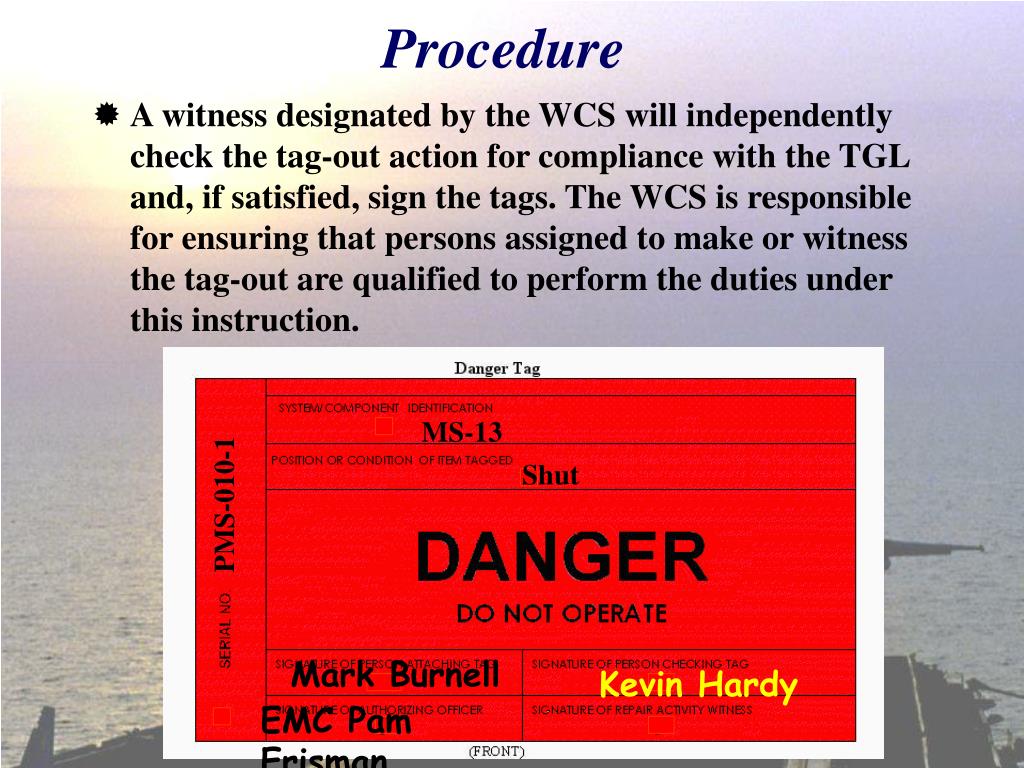
Attach your lock and tag to each energy-isolating device. Tags must include:
- Name of the authorized employee
- Date and time of lockout
- Reason for the lockout
Tags should be durable, legible, and tamper-resistant.
Remember: One person, one lock, one key. No shared locks.
6. Release Stored Energy and Verify Isolation
After isolation, neutralize any residual energy:
- Bleed hydraulic lines
- Drain capacitors
- Lower suspended loads
Then, test the controls. Press the start button. Try to engage the system. Nothing should happen.
If it does, the isolation failed. Start over.
Only after zero response should maintenance begin.
Common LOTO Mistakes That Put Workers at Risk
Even facilities with written procedures fail in execution. The most frequent errors?
Skipping Verification Technicians assume power is off because the machine isn’t running. They fail to test. In one case, a plant worker bypassed lockout because “it was just a quick fix.” The machine cycled on—fatality occurred.
Incomplete Energy Isolation Machines often have multiple energy sources. A technician locks out electricity but forgets hydraulic pressure. When a line is disconnected, the release causes injury.
Using Tags Without Locks In environments where locks aren’t used, tagout becomes a suggestion, not a safeguard. Tags can be removed, ignored, or lost.
Poor Communication Maintenance begins without notifying all affected staff. Someone restarts equipment, thinking it’s safe.
Group Lockout Confusion Multiple workers use a single lock or fail to follow the group lockout sequence. One person removes their lock early—everyone’s safety unravels.
These aren’t edge cases. They’re recurring patterns in OSHA investigation reports.
Equipment-Specific LOTO Examples One-size-fits-all doesn’t work. Here are practical applications across industries:
Manufacturing Press Machine Hazard: High-force mechanical movement and stored energy in flywheels. LOTO Steps: - Shut down using control panel - Lock main electrical disconnect - Engage mechanical lock on ram - Bleed hydraulic accumulator - Test operation
HVAC System Hazard: Electrical, refrigerant pressure, and fan movement. LOTO Steps:
- Turn off thermostat and disconnect
- Lock circuit breaker
- Close refrigerant isolation valves
- Tag condenser unit
- Verify shutdown at control board
Conveyor System Hazard: Multiple drive points, tension rollers, and remote start stations. LOTO Steps: - Notify all line operators - Power down main drive motor - Lock disconnects at head and tail pulleys - Use a group lockbox if multiple techs are working - Test start buttons at each station
Each scenario requires a documented, accessible LOTO procedure tailored to the equipment.
Building a Sustainable LOTO Program
Compliance isn’t a one-time audit checklist. It’s an ongoing system.
Develop Written Procedures Every piece of equipment requiring maintenance must have a clear, step-by-step LOTO guide. Include diagrams, energy sources, and required devices.
Train and Recertify OSHA requires initial and annual retraining. But effective training goes beyond compliance. Use real equipment, hands-on drills, and scenario-based testing.
Conduct Periodic Inspections At least once a year, a supervisor must audit each LOTO procedure in practice. Watch an employee perform shutdown, verify steps, and document findings.
Empower Employees Safety culture fails when workers fear reporting issues. Encourage questions. Reward correct LOTO use. Investigate near-misses.
Use Visual Aids Post color-coded lockout instructions near machinery. Use floor markings for isolation points. Make it hard to miss, easy to follow.
Tools and Devices That Support LOTO Compliance
The right hardware makes a difference. Here are five essential LOTO tools used in industry:
| Tool | Purpose | Best Use Case |
|---|---|---|
| Hasp and Lock Kit | Allows multiple locks on one isolation point | Group maintenance tasks |
| Valve Lockout Devices | Secures open or closed valves | Pneumatic, hydraulic, gas lines |
| Circuit Breaker Locks | Prevents breaker reactivation | Electrical panels |
| Plug Lockout Covers | Blocks electrical plugs | Portable equipment |
| Group Lockout Station | Centralized box for shared locks | Multi-craft maintenance |
Investing in durable, standardized equipment reduces confusion and ensures consistency.
Final Thoughts: Make LOTO a Reflex, Not a Reminder
A lockout and tagout procedure isn’t just OSHA compliance—it’s the foundation of trust in any industrial environment. Workers need to know that when they open a panel or enter a danger zone, the machine will not move.
Implementation starts with leadership. It thrives with training. It endures with accountability.
Write clear procedures. Train relentlessly. Audit consistently. And never, ever allow exceptions for “quick fixes.”
Because in the end, the few minutes spent on lockout aren’t lost time—they’re the moments that save lives.
Frequently Asked Questions
What is the difference between lockout and tagout? Lockout uses a physical lock to prevent energy activation, while tagout uses a warning tag. Lockout is preferred; tagout is allowed only when lockout isn’t possible.
Who can perform a lockout and tagout procedure? Only authorized employees trained in LOTO procedures can apply or remove locks and tags.
Can you use someone else’s lock in an emergency? Yes, but only under strict conditions: a formal removal procedure must be followed, including notification, verification of employee location, and documented justification.
How often should LOTO procedures be reviewed? Written procedures must be inspected annually, and retraining is required at least once per year.
What types of energy must be controlled during LOTO? Electrical, mechanical, hydraulic, pneumatic, chemical, thermal, and gravitational energy—all must be isolated.
Is LOTO required for corded plug-connected equipment? Yes, if the employee is exposed to hazardous energy. Simply unplugging is acceptable if the plug is under the employee’s exclusive control.
Can a manager remove a lock if the employee isn’t present? Only through an authorized lock removal procedure involving verification, notification, and documentation. Never force or bypass a lock.
FAQ
What should you look for in Lockout and Tagout Procedure: A Complete Safety Guide? Focus on relevance, practical value, and how well the solution matches real user intent.
Is Lockout and Tagout Procedure: A Complete Safety Guide suitable for beginners? That depends on the workflow, but a clear step-by-step approach usually makes it easier to start.
How do you compare options around Lockout and Tagout Procedure: A Complete Safety Guide? Compare features, trust signals, limitations, pricing, and ease of implementation.
What mistakes should you avoid? Avoid generic choices, weak validation, and decisions based only on marketing claims.
What is the next best step? Shortlist the most relevant options, validate them quickly, and refine from real-world results.