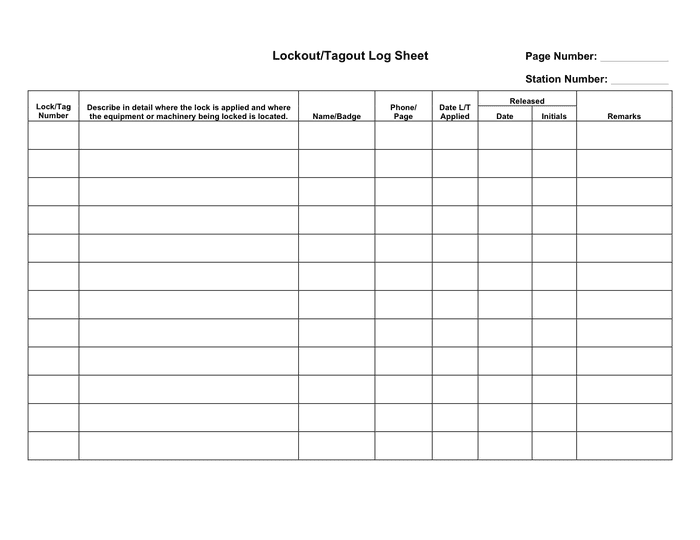
Every year, hundreds of workers suffer serious injuries—or worse—due to unexpected energization of electrical equipment during maintenance. These incidents are preventable. At the heart of that prevention lies a simple but critical tool: the lockout tagout kit for electrical LOTO.
When a motor reactivates mid-repair or a circuit panel suddenly powers up, the consequences are often catastrophic. A properly used lockout tagout kit doesn’t just comply with OSHA standards—it creates a physical and procedural barrier between danger and personnel. Yet too many workplaces treat LOTO kits as afterthoughts, using incomplete sets or outdated practices that leave gaps in protection.
This guide breaks down what makes an effective electrical lockout tagout kit, how to implement it correctly, and the real-world mistakes that compromise safety—even with a kit on hand.
Why Electrical LOTO Requires Specialized Lockout Kits
Not all lockout tagout kits are created equal. While some are designed for hydraulic or mechanical systems, electrical LOTO demands precision, insulation, and compatibility with high-voltage environments.
Electrical hazards introduce unique risks: arc flash, short circuits, and residual energy in capacitors. A general-purpose kit might include padlocks and tags, but it may lack insulated valve locks, circuit breaker lockouts, or cable lockout devices rated for electrical panels.
For example, consider a technician servicing a 480V motor control center. Without insulated lockout devices, the risk of accidental contact increases dramatically—even if the power is supposedly off. Specialized electrical LOTO kits include components rated for electrical use, often with dielectric testing to 1,000V, ensuring they won’t conduct current under fault conditions.
Core Components of a Complete Electrical Lockout Tagout Kit
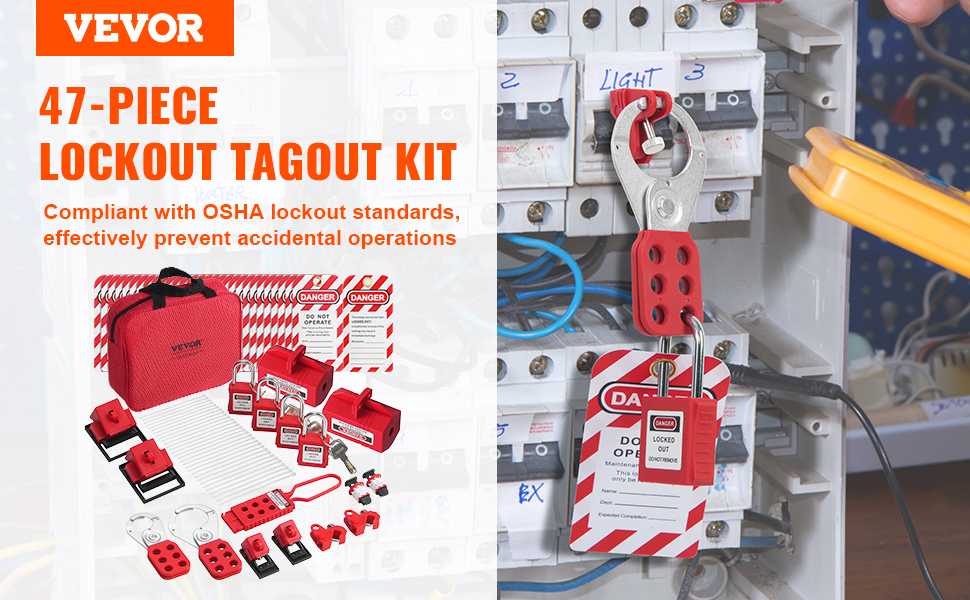
A robust lockout tagout kit for electrical LOTO isn’t just about having some locks and tags. It’s about having the right tools for the job. Here’s what a full-featured kit should contain:
1. Lockout Hasps and Multi-Lock Adapters Used to secure disconnect switches or breaker enclosures, allowing multiple workers to apply individual locks during group maintenance.
2. Circuit Breaker Lockouts (Slip, Bolt, or Toggle Style)
These physically prevent circuit breakers from being turned on. Slip-style fits standard breakers; bolt-style suits larger industrial units.
3. Electrical Padlocks (Insulated, 1–2 inch Shackle) Color-coded, keyed-alike or keyed-different padlocks with insulated shackles reduce shock risk. Each worker should have their own lock.
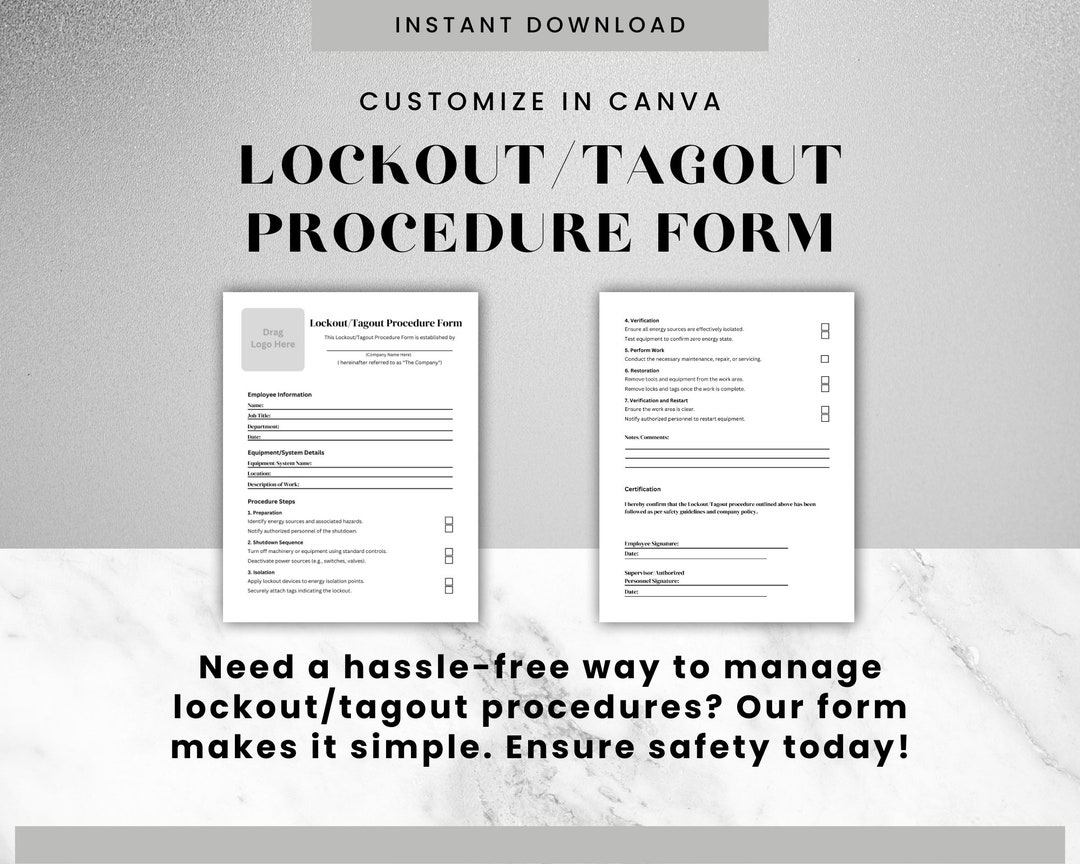
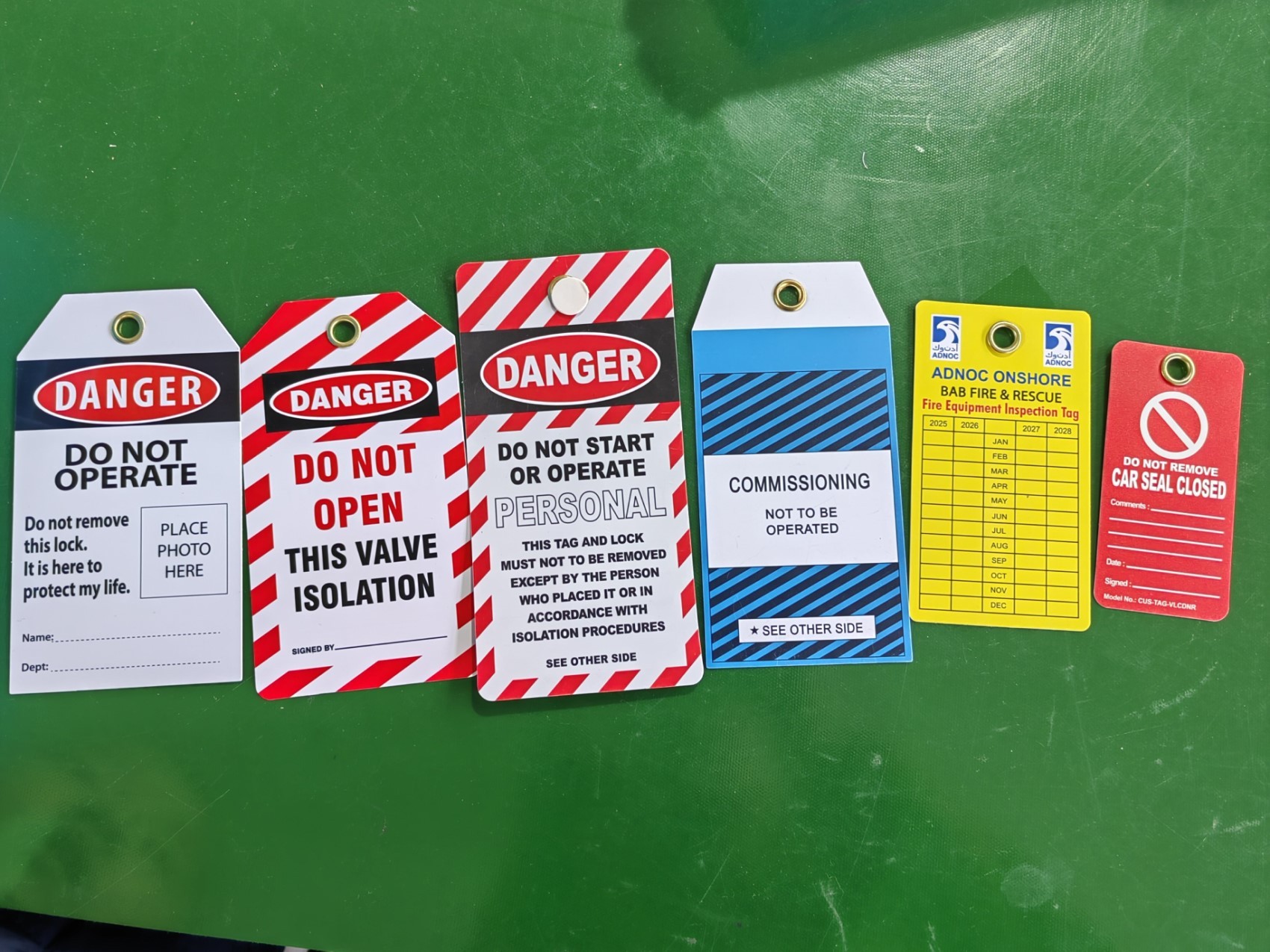
4. Danger Tags with Writeable Fields Tags must include space for name, date, department, and reason for lockout. OSHA requires them to be durable and tamper-resistant.
5. Outlet Lockout Devices Prevent accidental re-energization of outlets powering tools or equipment under service.
6. Group Lockout Hasps and Hasp Boxes For team operations, these allow multiple locks to secure a single energy isolation point, with accountability via a central log.
7. Insulated Lockout Cables and Valve Locks Useful for securing busbars, selector switches, or multi-position electrical disconnects.
8. Storage Case (Wall-Mount or Portable) Keeps components organized, visible, and accessible. Clear labeling ensures fast deployment.
A well-stocked kit should cover all common electrical isolation points in your facility. Gaps—like missing breaker lockouts for specific models—render the entire system unreliable.

Common Mistakes That Undermine Electrical LOTO Safety
Even with a high-quality lockout tagout kit, improper use can nullify protection. These are the most frequent errors observed in the field:
Skipping the Energy Isolation Check Applying a lock doesn’t guarantee zero energy. Always test for voltage after lockout using a properly rated multimeter or tester.
Using Non-Insulated Devices on Electrical Systems Plastic-coated locks aren’t inherently insulated. Only use devices explicitly tested and labeled for electrical use.
Sharing Locks or Using Master Keys Each worker must apply their own lock. Shared or master-keyed locks defeat personal accountability.
Incomplete Tag Information Tags missing names, dates, or work scope reduce traceability and increase the risk of unauthorized removal.
Poor Kit Accessibility If the kit is locked in a cabinet or stored off-site, workers may bypass LOTO procedures entirely.
One real-world case involved a maintenance team replacing a transformer. They used a standard lockout kit without insulated breakers locks. During removal, a colleague unknowingly re-energized the panel—resulting in a flash injury. The root cause? The kit lacked components specific to their electrical setup.
How to Choose the Right Lockout Tagout Kit for Electrical LOTO
Selecting a kit isn’t about picking the most expensive or largest set. It’s about matching your kit to your facility’s electrical infrastructure.
Start with an energy control audit: - Identify all electrical isolation points (disconnects, breakers, outlets, MCCs). - Note sizes, types, and voltage levels. - Determine how many workers typically perform maintenance simultaneously.
Then, ensure your kit includes: - Lockout devices compatible with your breaker models - Enough padlocks and tags for team use - Insulated tools rated for your highest voltage - Clear labeling and bilingual tags if needed
Also consider scalability. Modular kits let you add components as equipment changes. Brands like Brady, Grainger, and Master Lock offer customizable kits tailored to electrical applications.
Top 5 Lockout Tagout Kits for Electrical LOTO
Choosing the right kit can be overwhelming. Here are five proven options, each suited to different environments:
| Kit Name | Best For | Key Features | Approx. Price |
|---|---|---|---|
| Brady B519-24 | Industrial Facilities | 24-piece kit, insulated locks, circuit breaker lockouts, OSHA-compliant tags | $220 |
| Grainger 52KY41 | High-Voltage Environments | Dielectric-tested components, 1,000V rating, multi-lock hasps | $190 |
| Master Lock 1940EURD | Small Teams | Compact, wall-mount case, 10-user stations, includes outlets and breakers | $160 |
| DEWALT DWLOTO2 | Mobile Maintenance Crews | Portable, rugged case, includes cable lockouts and universal breaker adapters | $130 |
| Seton 82470-10PK | Multi-Language Needs | Bilingual tags (EN/ES), 10-user group lockout, insulated padlocks | $200 |
Choose based on your specific needs. A large plant with multiple voltage levels needs modularity and scalability. A small workshop may prioritize portability and cost.
Implementing LOTO Procedures: Beyond the Kit
A lockout tagout kit is only as effective as the procedure behind it. OSHA’s standard (29 CFR 1910.147) requires more than hardware—it demands a documented energy control program.
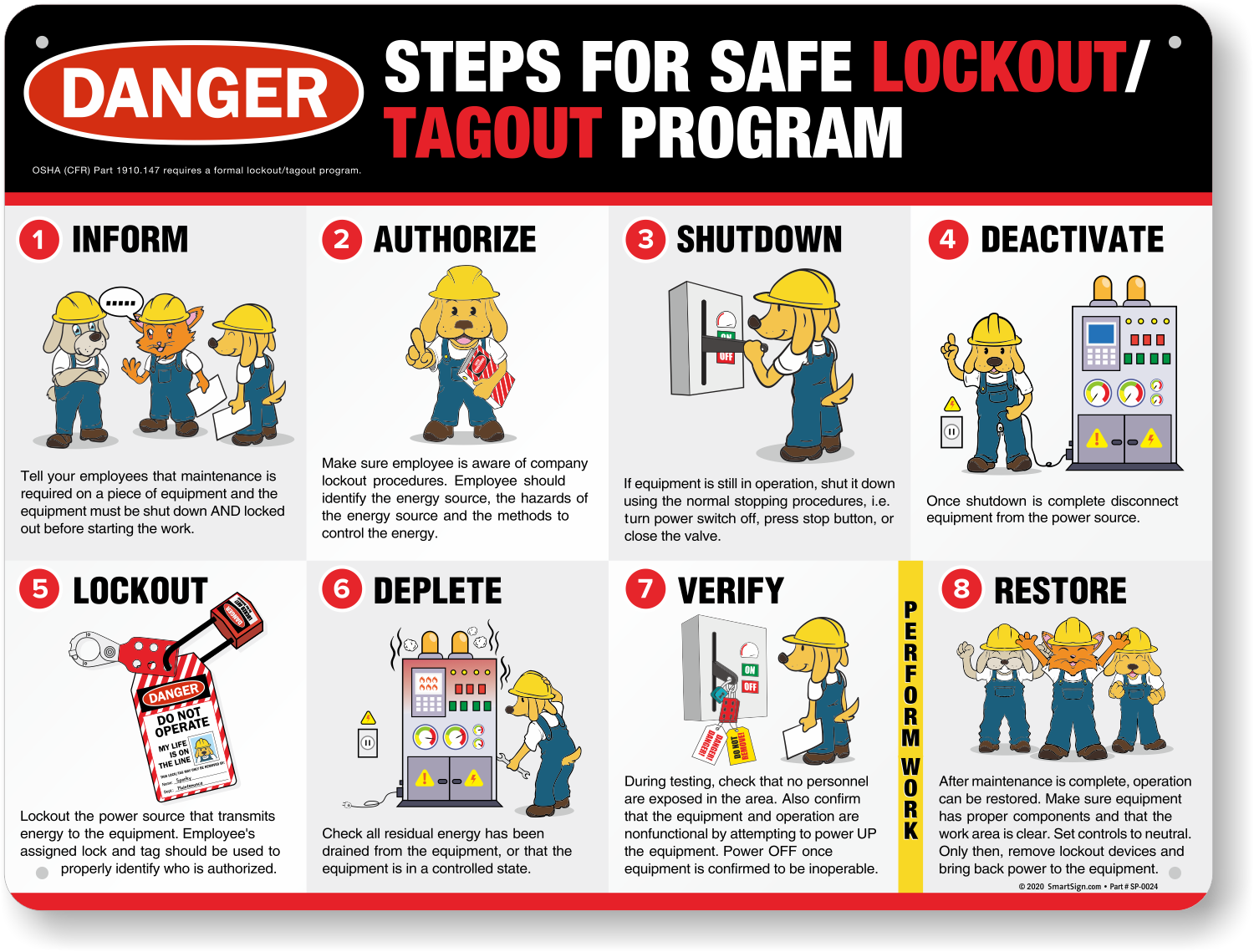
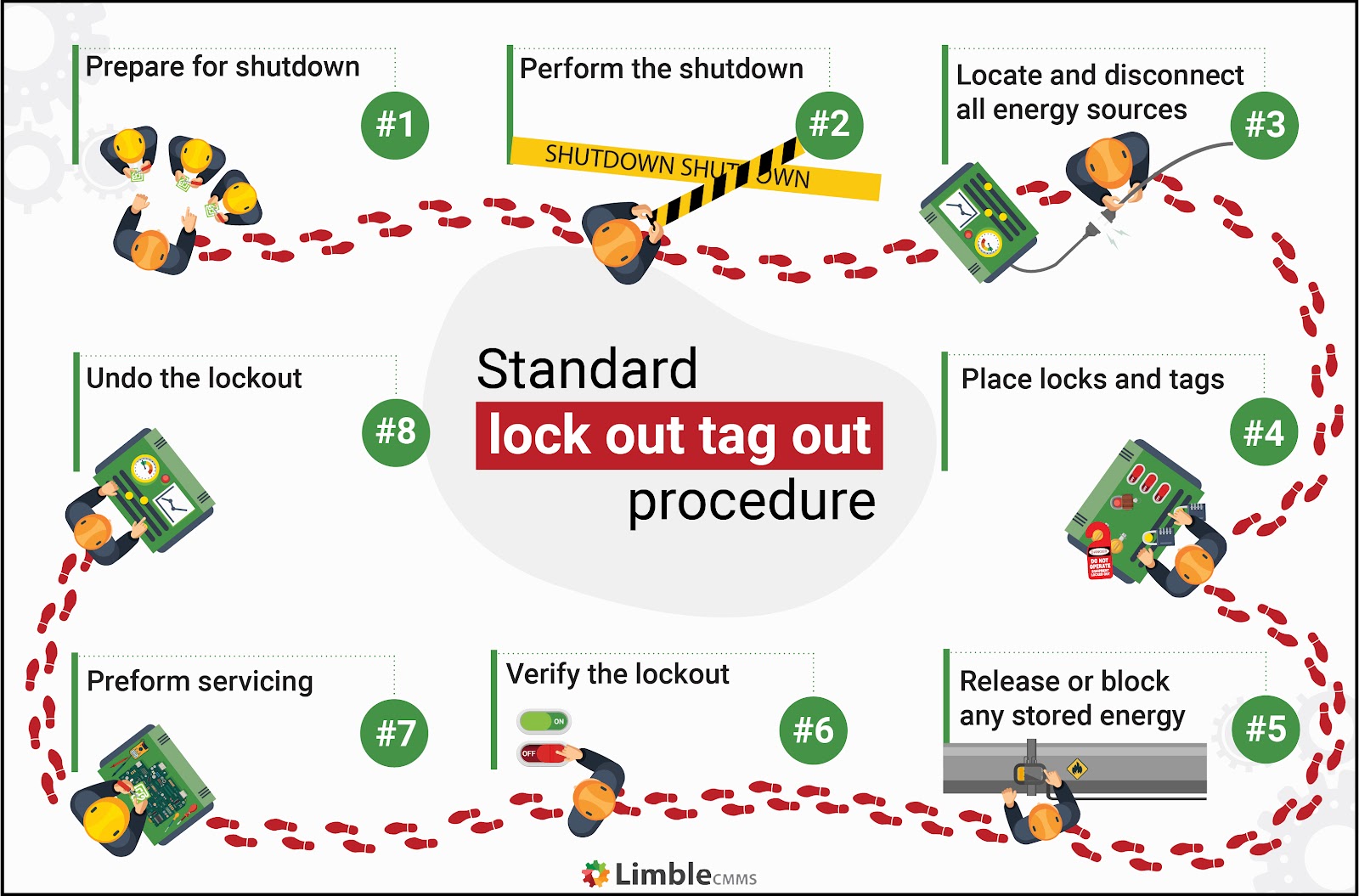
- Key steps:
- Identify all energy sources (electrical, capacitive, stored).
- Notify affected employees before shutdown.
- Shut down equipment using normal controls.
- Isolate energy sources with disconnects or breakers.
- Apply lockout devices and tags—one per worker.
- Verify zero energy by testing.
- Perform maintenance.
- Remove devices only by the person who applied them.
Regular training and audits are essential. Conduct mock LOTO drills quarterly. Inspect kits monthly for missing or damaged components.
One automotive plant reduced electrical incidents by 78% after introducing monthly LOTO audits and standardized kits at each production line. The change wasn’t new technology—it was consistency.
Real-World Use Case: Retrofitting a Packaging Line
A food processing facility upgraded its packaging line, requiring frequent electrical maintenance on servo drives and control panels. Initially, workers used ad-hoc locks and handwritten tags.
After an arc flash incident during a routine check, the safety team implemented a formal electrical LOTO program: - Audited all electrical isolation points - Selected the Brady B519-24 kit for its compatibility with Allen-Bradley breakers - Trained 30 technicians on LOTO procedures - Installed wall-mounted kits at each production zone
Within six months, unauthorized energization attempts dropped to zero. The investment in proper kits and training paid for itself in downtime prevention and risk reduction.
Closing: Make Your Lockout Tagout Kit a Living System
A lockout tagout kit for electrical LOTO isn’t a box you buy and forget. It’s the physical backbone of a safety culture. Treat it with the same rigor as fire extinguishers or PPE—inspect it, train on it, and enforce its use.
Start today: Audit your current kit. Does it cover every electrical point? Are locks insulated? Are tags compliant? If not, upgrade. Then train your team—not just on how to use the kit, but why it exists.
Because when a circuit unexpectedly powers up, it’s not just a procedural failure. It’s a human one. And that’s exactly what a proper electrical LOTO system prevents.
FAQ
What is the difference between lockout and tagout? Lockout uses physical devices (like locks) to isolate energy, while tagout relies on warning tags. OSHA requires lockout as the primary method; tagout alone is only allowed in specific cases with additional safeguards.
Can I use any padlock for electrical LOTO? No. Only use padlocks with insulated shackles rated for electrical work. Standard locks may conduct current and increase shock risk.
How many locks can go on a single circuit breaker? Use a group lockout hasp to allow multiple locks. Only one lockout device should be applied to the breaker itself, but multiple workers can secure that device with their individual locks.
Are plastic lockout devices safe for electrical systems? Only if they’re tested and rated for electrical use. Look for dielectric testing up to 1,000V. Non-rated plastic can degrade or crack, creating hazards.
Do I need a separate kit for each department? It depends on workflow. Centralized kits work for small teams, but distributed kits (e.g., one per production line) improve accessibility and compliance.
Can tagout be used without lockout? Only under strict conditions: if the equipment isn’t designed for lockout, and you have an alternative protection program approved by OSHA.
How often should LOTO kits be inspected? Monthly inspections are recommended. Check for missing parts, damaged locks, worn tags, and proper storage. Replace components immediately if compromised.
FAQ
What should you look for in Lockout Tagout Kit for Electrical LOTO: What You Need to Know? Focus on relevance, practical value, and how well the solution matches real user intent.
Is Lockout Tagout Kit for Electrical LOTO: What
You Need to Know suitable for beginners? That depends on the workflow, but a clear step-by-step approach usually makes it easier to start.
How do you compare options around Lockout Tagout Kit for Electrical LOTO: What You Need to Know? Compare features, trust signals, limitations, pricing, and ease of implementation.
What mistakes should you avoid? Avoid generic choices, weak validation, and decisions based only on marketing claims.
What is the next best step? Shortlist the most relevant options, validate them quickly, and refine from real-world results.